Loading...
Serving Cleveland, TN and surrounding areas. (423) 250-7212
Cleveland's clay soil moves with the seasons. We pour footings at the right depth and width for local conditions so your porch, deck, or addition stays level for years.
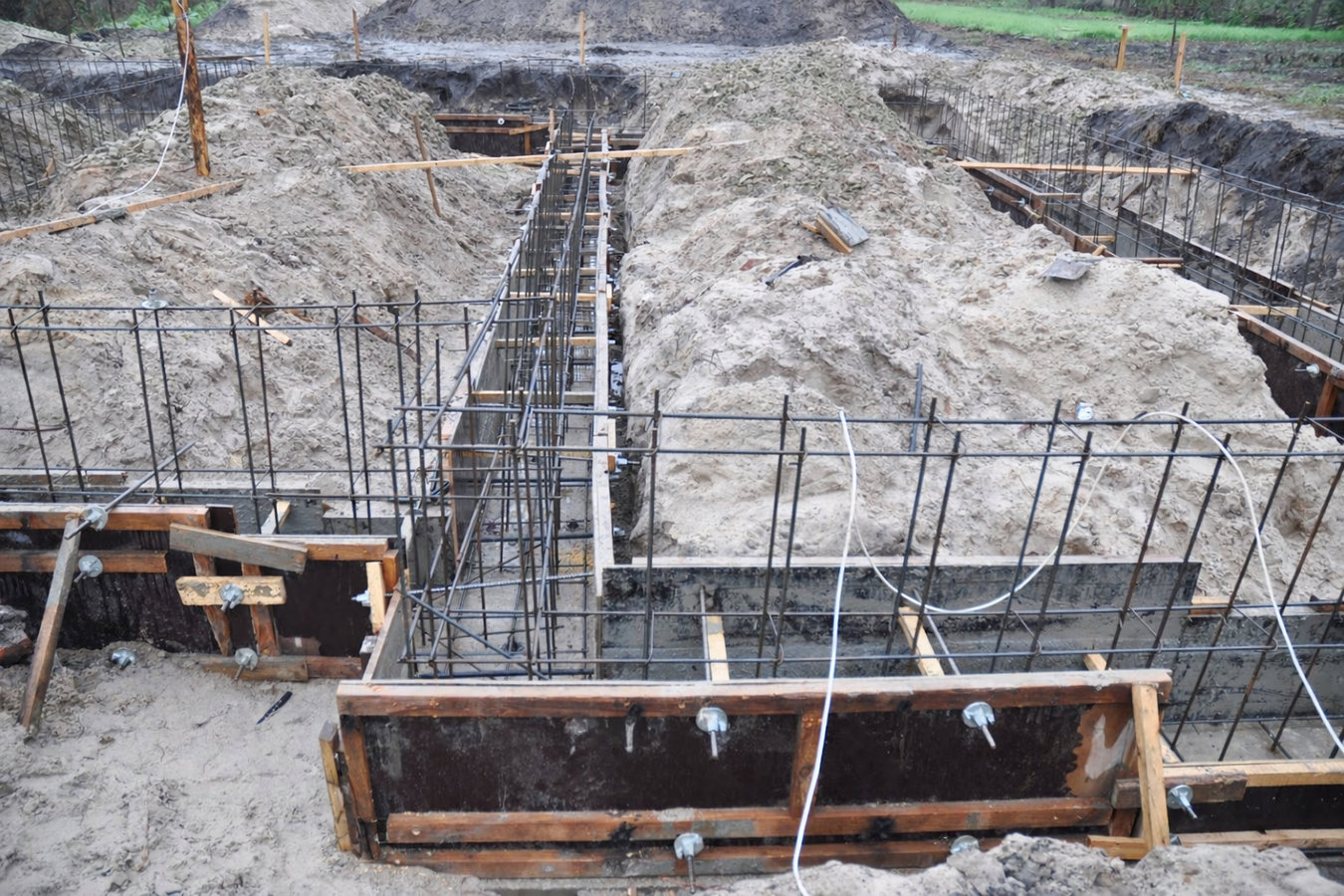
Concrete footings in Cleveland involve digging to the required depth below the frost line, setting forms, and pouring a reinforced concrete base sized for the load it will carry. Most residential footing projects take one to two days of active work, with a curing period of roughly a week before lighter structures can be built on top and about 28 days for full concrete strength.
Footings are the hidden part of any new porch, deck, garage, or room addition. They are also what determines whether that structure stays level through Cleveland's wet winters and dry summers. If you are planning a larger structural project, our foundation installation service covers full foundation systems for new construction, while footings are the right scope for most residential additions and outbuildings.
We serve homeowners and property owners across Cleveland and the surrounding area. Call us to describe your project and we will walk you through what is involved before anything is scheduled.
If you can see a gap opening between your porch and the main structure, or deck boards are no longer level, the footings underneath may have shifted. Cleveland's clay soil swells and shrinks with the seasons, and footings not set deep enough get pushed around over time. This is a structural issue, not a cosmetic one.
Cracks wider than about the thickness of a dime, or diagonal cracks running from the corners of windows and doors, suggest the footing below may be settling unevenly. Bradley County's clay soils and heavy rainfall can accelerate this kind of movement. New or growing cracks are worth having someone look at before the problem gets larger.
When a footing settles unevenly, the house frame above it can shift slightly out of square. The first place you usually notice this is in doors and windows that used to open easily but now stick or leave visible gaps. In older Cleveland homes, the original footings may not have been designed for local soil conditions.
Any new structure attached to your home - or a freestanding garage, shed, or covered patio - needs its own footing to stay stable and meet local building requirements. The footing is the first thing that needs to be planned and permitted, not an afterthought at the end of the project.
We pour concrete footings for a wide range of residential projects - decks, porches, covered patios, detached garages, room additions, and accessory structures. Every footing project starts with an on-site assessment of the soil and access conditions before we finalize the depth and dimensions. We pull all required permits through the City of Cleveland or Bradley County, coordinate the pre-pour inspection, and handle utility marking through Tennessee 811 before any digging begins.
For projects that go beyond standard footings, we can tie the footing work into a full foundation installation for new construction, or pair new footings with foundation raising if an existing structure has settled and needs to be releveled before new work begins. We coordinate across all phases so you are not managing multiple contractors.
Best suited for freestanding decks, attached porches, and covered patios that need a code-compliant concrete base below frost depth.
For room additions, attached or detached garages, and workshops that require structural footings sized for the load of the building above.
For sheds, carports, pergolas, and other outbuildings that need a stable, permitted concrete base without the scope of a full foundation.
For older Cleveland homes where the existing footings predate current building standards and need to be evaluated or reinforced before an addition is built on top.
The red clay soil common throughout Bradley County is what contractors call expansive - it absorbs water and swells in wet weather, then shrinks and pulls away in dry stretches. That movement is one of the main reasons footings in this area fail: a footing that was poured to the minimum dimensions without accounting for local soil behavior will shift over time, tilting whatever sits on top of it. We assess your specific property before we finalize the dimensions, because the soil two blocks away may behave differently than the soil in your backyard. Homeowners across central Cleveland deal with this regularly, particularly in older neighborhoods where drainage near the foundation has not been maintained.
Cleveland also receives around 52 to 55 inches of rain per year, with the heaviest rainfall coming in spring. Water that saturates the soil around a footing puts lateral pressure on the concrete and slowly undermines the base. Proper drainage around the footing area is part of how we plan every job, not an afterthought. We also work throughout the broader service area, including Chattanooga, TN, where similar ridge-and-valley soil and rainfall patterns apply. If you are in one of Cleveland's established neighborhoods and planning any kind of structural addition, it is worth getting the footing assessment right the first time.
We ask a few basic questions, then visit your property to look at the soil, measure the area, and check equipment access. You get a written estimate after the visit - not a ballpark number over the phone.
We apply for the required City of Cleveland or Bradley County permit and contact Tennessee 811 to mark underground utility lines at least three business days before digging. Both steps are standard - you do not need to manage them.
The crew digs to the required depth, sets reinforcing steel, and places the forms. A city or county inspector visits to confirm depth and layout before any concrete is poured - this is required and we coordinate it.
Once the inspection is approved, the concrete is poured and the forms stay in place for 24 to 48 hours. We tell you exactly how long to wait before building begins - typically a week to ten days for lighter residential structures.
We visit the site, give you a written quote, and pull all required permits. No obligation. Replies within 1 business day.
(423) 250-7212We visit every property before finalizing the footing dimensions. Bradley County clay varies from lot to lot, and a footing that is right for one address may not be adequate for the next. We do not guess - we look at what you have before we pour.
Footing permits in Cleveland require a pre-pour inspection, and unpermitted structural work creates real problems when you sell or refinance. We pull the permit, schedule the inspection, and make sure everything is on record before we leave. Your project is protected.
Cleveland's summer heat can cause freshly poured concrete to dry too fast on the surface before it has fully hardened inside - a condition that leads to cracking. We schedule pours for the cooler part of the day and keep the concrete properly moist during the critical first days. For more on curing best practices, see the Portland Cement Association.
Many Cleveland homes built in the 1950s through 1980s have footings designed to older standards. If you are adding onto a home of that age, we assess what is already there before we build on top of it, so your new addition ties in correctly and does not create problems further down the road.
Footing work is the part of a project most homeowners never see - but it is what every structure above it depends on. We take it seriously because getting it wrong means problems years later that are expensive to fix.
For structures that have settled unevenly, foundation raising restores level and stability before new construction or footing work begins.
Learn MoreFull foundation systems for new home construction and major additions, covering everything from footings through the completed foundation wall.
Learn MoreSpring project slots fill quickly. Call now or send us a message and we will get back to you within 1 business day.